All Categories
Featured
Table of Contents
"High real estate expenses, minimal inventory, and a slightly enhanced however still-elevated price gap is keeping many individuals in location longer than they might have in previous cycles." At the exact same time, fewer relocations does not always indicate less modification it often signifies more thoughtful, long-term preparation. When people do choose to transfer, the motivations behind those moves tend to be more deliberate and future-focused.
Long-lasting family preparation and monetary stability goals. Another key indication of how moving patterns are altering in 2026 is the growing impact of the "lock-in result," which is keeping numerous house owners from relocating even as their requirements develop.
Key methods the lock-in result is influencing moving patterns include: Homeowners holding onto home loan rates given that they are historically low. Moves increasingly set off by necessity rather than preference.
What's moving, however, are the factors behind these moves. Trends forming long-distance relocations in 2026 include: Relocations inspired by quality of life, such as access to better schools or features.
How Should Storage Prices Change in 2026?Desire for a strategic, intentional move rather than a reactive one. McConnell explains, "As more families make relocations across state lines, there's growing need for digital planning tools, precise price quotes, and real-time delivery presence.
Your Strategic 2026 Transition Plan
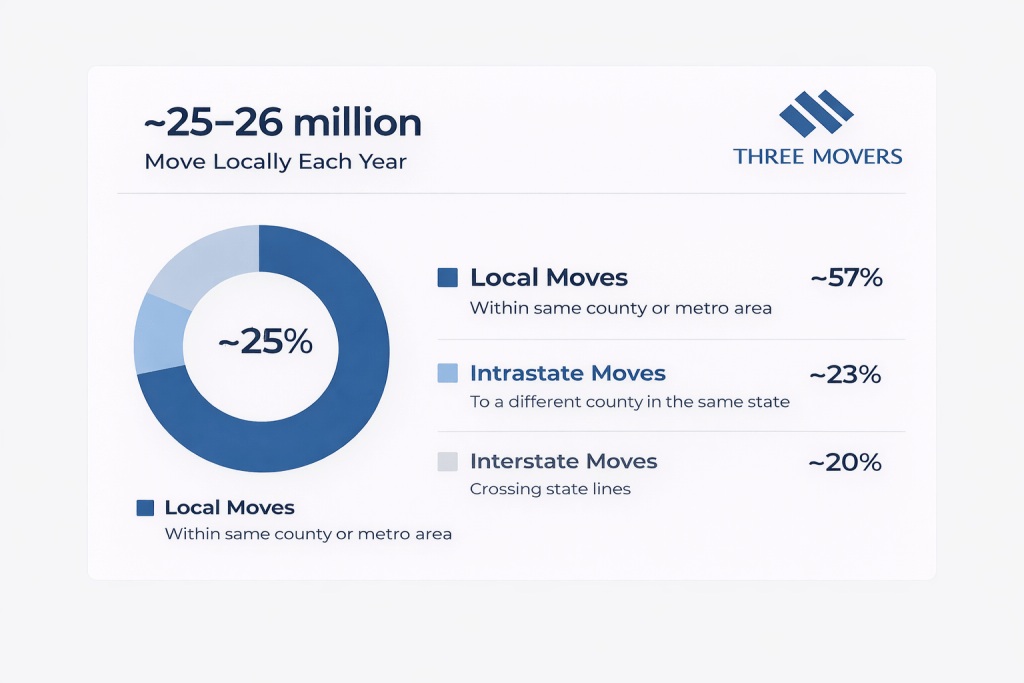
Rising home costs and limited inventory are making it harder for people to move within their metro locations or areas, specifically in higher-cost markets. Many homeowners and tenants are postponing these moves up until conditions end up being more favorable, contributing to the total downturn in movement.
"Restricted stock and price pressures continue to suppress short-distance movement, specifically in higher-cost markets." Aspects impacting local moves in 2026 consist of: Limited stock limiting choices for upgrading, downsizing, or relocating nearby. Affordability pressures keeping homes in location longer than they may prefer. Short-distance relocations are closely tied to real estate market variations instead of lifestyle or family changes.
Local movement reduced in historically high-cost states while lower-cost areas see more fluid movement. Technology is playing a progressively essential role in how people prepare and perform relocations, reflecting another method how moving trends are altering in 2026. Clients today anticipate clearness, convenience, and confidence throughout the moving process, and business like Atlas Van Lines are fulfilling those expectations with digital tools and AI-driven options.
"These tools help improve operations while offering customers clearer expectations around prices, timing, and logistics." Key ways technology is improving the moving experience: AI-powered estimates offer faster, more personalized rates early in the moving journey. Virtual visit surveys permit consumers to schedule and conduct home studies digitally. Digital stock tools let users submit photos, videos, or descriptions of possessions to produce a precise inventory.
How Should Storage Prices Change in 2026?Enhanced interaction and planning help in reducing surprises and provide customers greater confidence. As moving trends evolve, client expectations are increasing along with the tools and services readily available to support them. Today's movers desire openness, benefit, and confidence at every stage of the process, from approximating costs to tracking shipments. McConnell highlights, "Consumers today expect clarity, accuracy, and confidence throughout the moving procedure.
New Relocation Developments
Flexibility to arrange appointments and handle inventories on their own terms. As moving patterns continue to evolve, comprehending how moving trends are altering can assist households make smarter, more confident choices about where and when to move.
By remaining informed on these shifts, purchasers, sellers, and tenants alike can much better navigate the chances and obstacles of today's housing market.
The year 2026 is reshaping how and where Americans call home. From shifts in remote work patterns to cost-of-living factors to consider, individuals are redefining what "the ideal location to live" suggests. With cost, way of life, and climate at the leading edge, metros like San Diego, California are becoming leading locations for households, experts, and retirees alike.
While specific high cost metro locations, like San Francisco and Los Angeles, see some outgoing migration, San Diego County has remained extremely stable due to its special combination of economic chance, outside way of life, and housing diversity. Inbound movers to California in 2026 typically mention: Career transfers within the technology and biotech sectors Access to education at universities like UC San Diego Year-round sunshine and multiculturalism Broadening rural communities offering more versatile real estate alternatives postal code such as 92101 (Downtown) and 92109 (Pacific Beach) continue to experience steady in-migration from out-of-state buyers moving from Seattle, Denver, and Chicago.
The Complete 2026 Relocation Guide
The city's balance of chance and lifestyle makes it specifically interesting: Remote experts looking for work life balance with ocean views Retirees seeking seaside tranquility and medical access by means of Scripps Health and Sharp HealthCare Military households based near Naval Base San Diego Tech and biotech experts employed at Qualcomm, Illumina, and research study organizations Popular neighborhoods for 2026 inbound movers include: North Park (92104 ): Fashionable, walkable, and perfect for young specialists La Jolla (92037 ): High end seaside life with high-end housing Chula Vista (91910 ): Family-friendly price Del Mar (92014 ): Resort design coastal community living Landmarks like Balboa Park, Petco Park, and the Gaslamp Quarter continue to bring in both newbies and long-lasting homeowners, reinforcing San Diego's reputation as a well rounded city for all ages.
Contributing factors consist of: High wages balancing out higher real estate costs: The mean family income in San Diego reached $107,000 in 2026, driven by tech, healthcare, and defense markets. Environment benefit: Regularly mild weather and clean energy efforts make outside living attractive year round. Work versatility: With over 32% of employees now hybrid or remote, place choices prioritize quality of life rather than office proximity.
Specialists predict that 2027 and beyond will bring continued migration towards climate-stable regions with strong financial fundamentals. San Diego's blend of seaside access, technology development, and cultural appeal positions it as a continued favorite for brand-new movers. Areas such as Eastlake, Oceanside, and Encinitas are likewise anticipated to see increased residential development as housing need broadens inland.
Understand property worths relative to neighboring markets. At Heritage Homes Real Estate, we assist clients translate market data, explore the best communities, and make informed moving decisions throughout San Diego County.

Latest Posts
Settling Into New Communities in 2026
Expert Advice On Domestic Relocation in 2026
How to Streamline a Domestic Move